
At the Old Break
Two months and two inches later.

Hello Beauties,
I’m shorter than the last time I wrote you. I’m a few inches shorter, an inch, something. I haven’t measured.
I like saying I’m two inches shorter than I was the first week of March. That feels like a nice round number, poetic, funny, self-deprecating. It masks the fact that I don’t yet know how to talk about what is happening right now. Like all of us in this chaotic and upending time. All of us are in a defensive crouch, some ready to fight, some ready to flee, checking in with each other in updates that voice the severity of this moment, if we can talk about it at all.
It has been a surreal season here, moving out of book tour mode, weathering the horrors of this moment in my country. I was already off balance, tired, when, on March 12, I fell in my kitchen and broke my back. I’m not going to write much more about it here. Again, defensive crouch.
I’m trying to write an essay about the fall, the pain that followed, my current recovery. I’m trying to excavate histories of bone and narrative, abuse and healing, motherhood and transition. There will be an essay in the end, once I know what I think. For now, I’m set down on my heels, coiled up like a spring, waiting until I feel I can launch that story, that art, that understanding.
I will say that I broke my T12 vertebra, a bursr fracture that kind of pancaked it, hence the loss of height. That bone is short now. My limbs are fine. So is my spinal cord. Thank god. I will say that I spent ten days in a hospital room on the “prestige floor” with a view of the sunset every night that took my breath away. I got amazing care. I will say that I am healing, that I am cleared to drive now, to ditch the rigid back brace when I can, to bend and to twist and to walk.
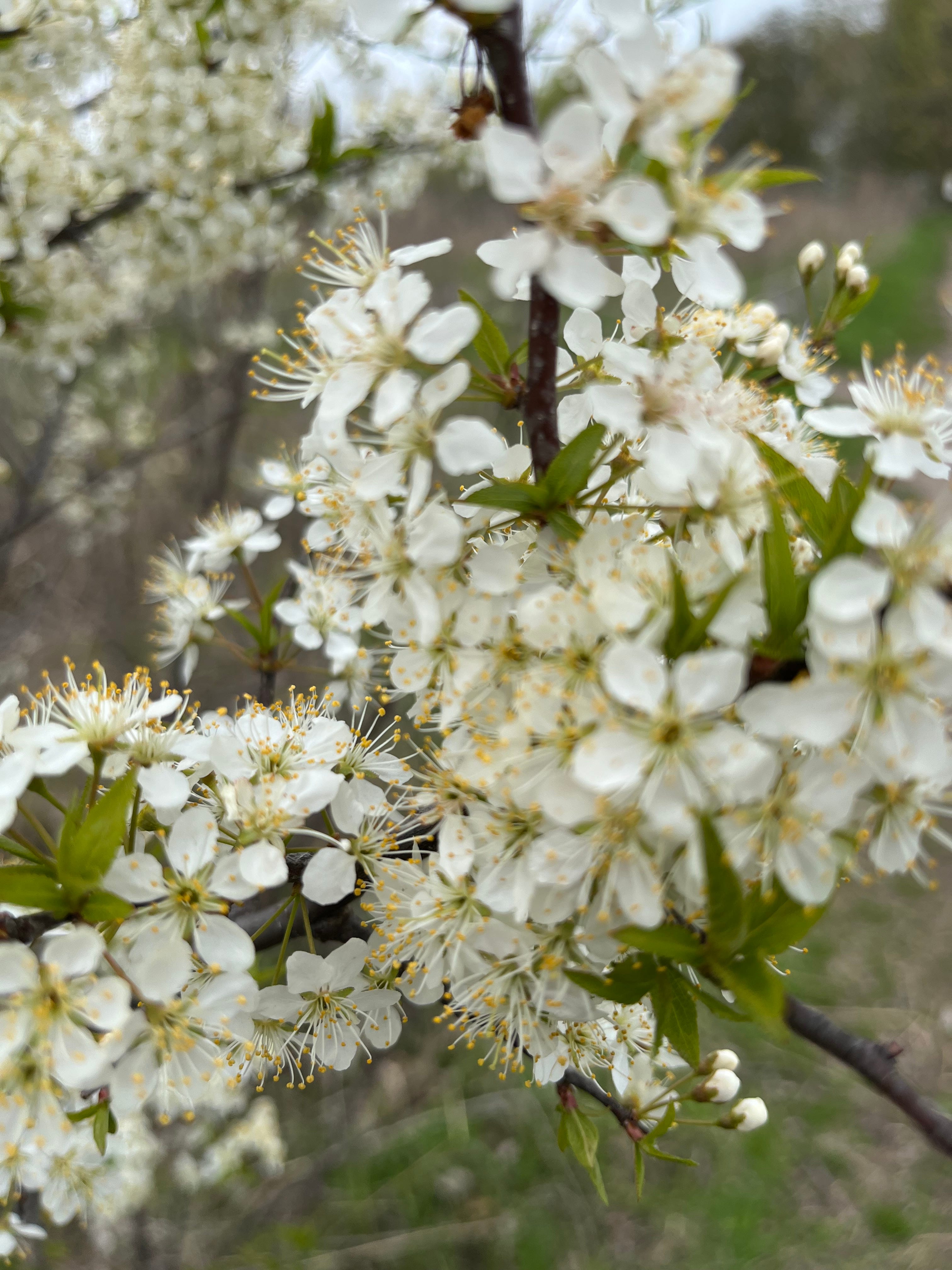
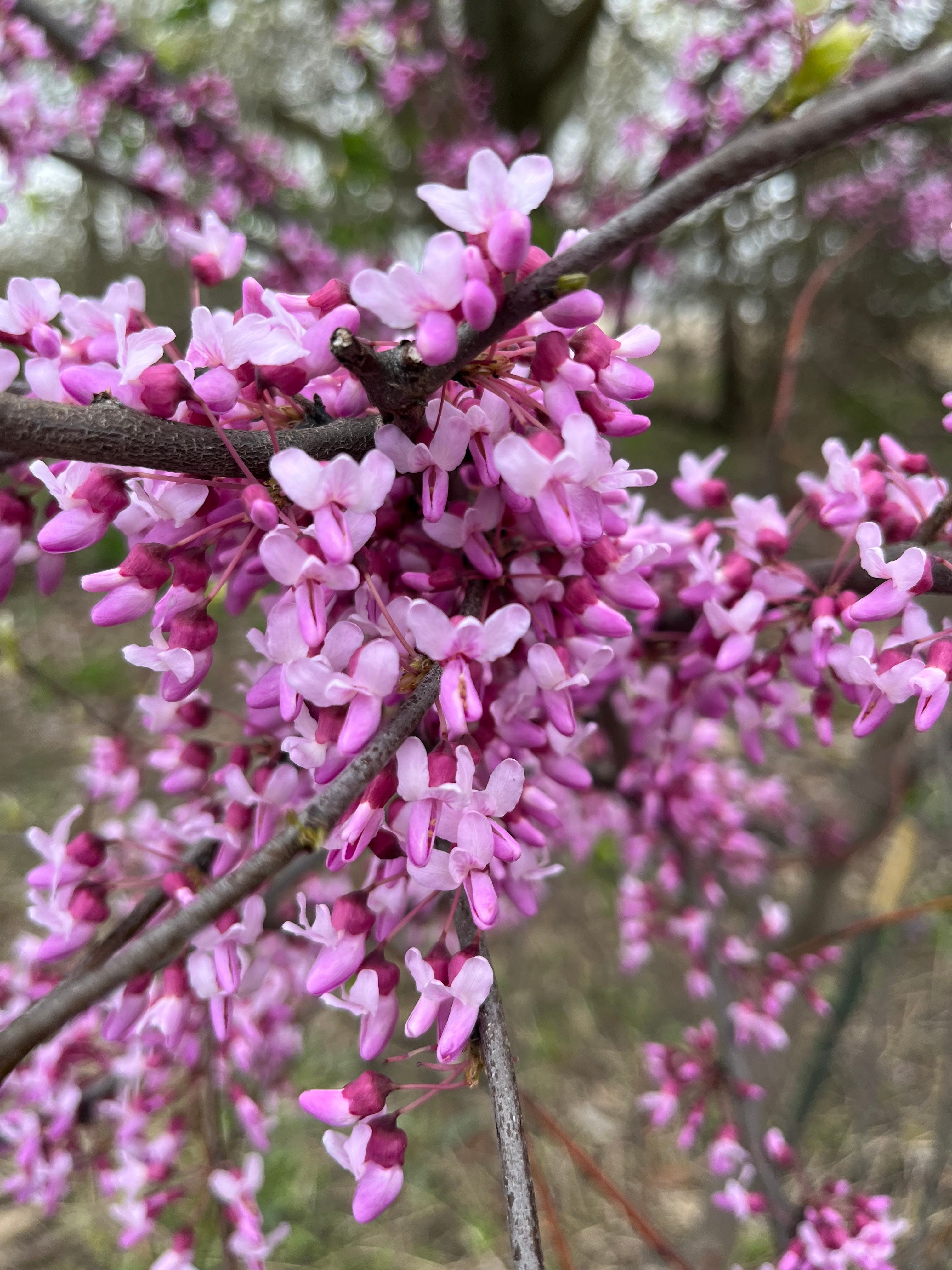
Last weekend I went out to look at birds and redbud blooms (did you know they are edible?) and to smell apple blossoms. My recovery from this accident will be shorter than the recovery from previous injuries, notably the broken patella that took me out for months and months, or the fall in my memoir that meant I couldn’t drive for three months. Here, only weeks later, I’m more myself than I expected to be, ready to travel, teaching, planning my summer as it barrels down on me, forgetting to rest, as is my wont.
But I am also very much aware that this narrative embarrasses me: another injury, another reminder that I have to rest more than I want to, another vulnerability. As a friend said to me recently, “Oh, are you ashamed that your disabled body goes with you wherever you do?” Turns out, even though I work in the space of disability narrative, disability justice, and write about chronic illness, I’m still capable of being ashamed by something simple like a broken bone. Defensive crouch.
In fact, I want to write this essay right now not because I understand what this injury means, but because I want to tell you how it isn’t my fault—as if disability could be written off to fault—because some part of me hasn’t yet interrogated all the corners of my ableism. I want to tell you that the doctors told me that this is a re-injury of an old break, a bone I shattered when I was pregnant 20 years ago and didn’t get checked out. Pregnant, then a new mom in a bad marriage, I ignored my need, my pain, my injury. I want to tie this up with a bow, even though I know better. Which is precisely why I cannot write the essay yet. I need to lean into the open-endedness of living a real life and I need to do that on the page. I’m too rigid and afraid, too ashamed. Not ready.
I’ve started to think about how I can’t really refer to this recent break as “the accident” because I’ve referred to so many falls that way. I’ve started to talk to doctors about why I fall so much. I’ve started to make lists of all the falls I’ve had, the ones my mother has had, so I can find some meaning, some narrative to all of them.
At this moment of my new accident, it is hard not to notice how much we’re all in an ongoing accident, one we don't know how to discuss. We see each other in public and blink at the speed of change, the cost of losses, the impossibility of planning, the pain of trying to talk about normal lives, or even good news, when we are all watching everything break. Maybe those things were broken twenty years ago. Maybe they were weak from poor healing. Maybe it is not our fault. Maybe it is. Maybe that’s the wrong way to think about fascism too, as something we could personally change if we just did everything right.
Because what I am learning here in this moment—and over and over again as if I didn’t just publish two books about this very thing—is that the collective is the only protection for the individual impacts of the things we can’t personally control. We have to band together to protect each other from the complexities and pains of being a human in a human body on planet earth.
We need each other. We need to talk about what is happening. We need the marches and the rallies and the protests. We need the scientists saving data. We need the colleges training new scientists. We need the courts and the journalists. We need the friends who will bring birthday cupcakes to the bed where you are healing your spine. We need the students who read about the hope you have for the world. We need the book clubs and the public lectures and the interviews, the book tours and the independent bookstore days. We need the doctors and nurses putting us back togehter. We need all of us.
I know what leads me out of a defensive crouch. It is the extended hand of my friend. I can take that hand, let them pull me up, we can walk to a forest and stand in falling blossoms and look at each other and not know the answer to solving the crashing country, or solving the healing bone, or solving the rising temperatures. We can just accompany each other through it, and make each other more brave, more healed, less alone.
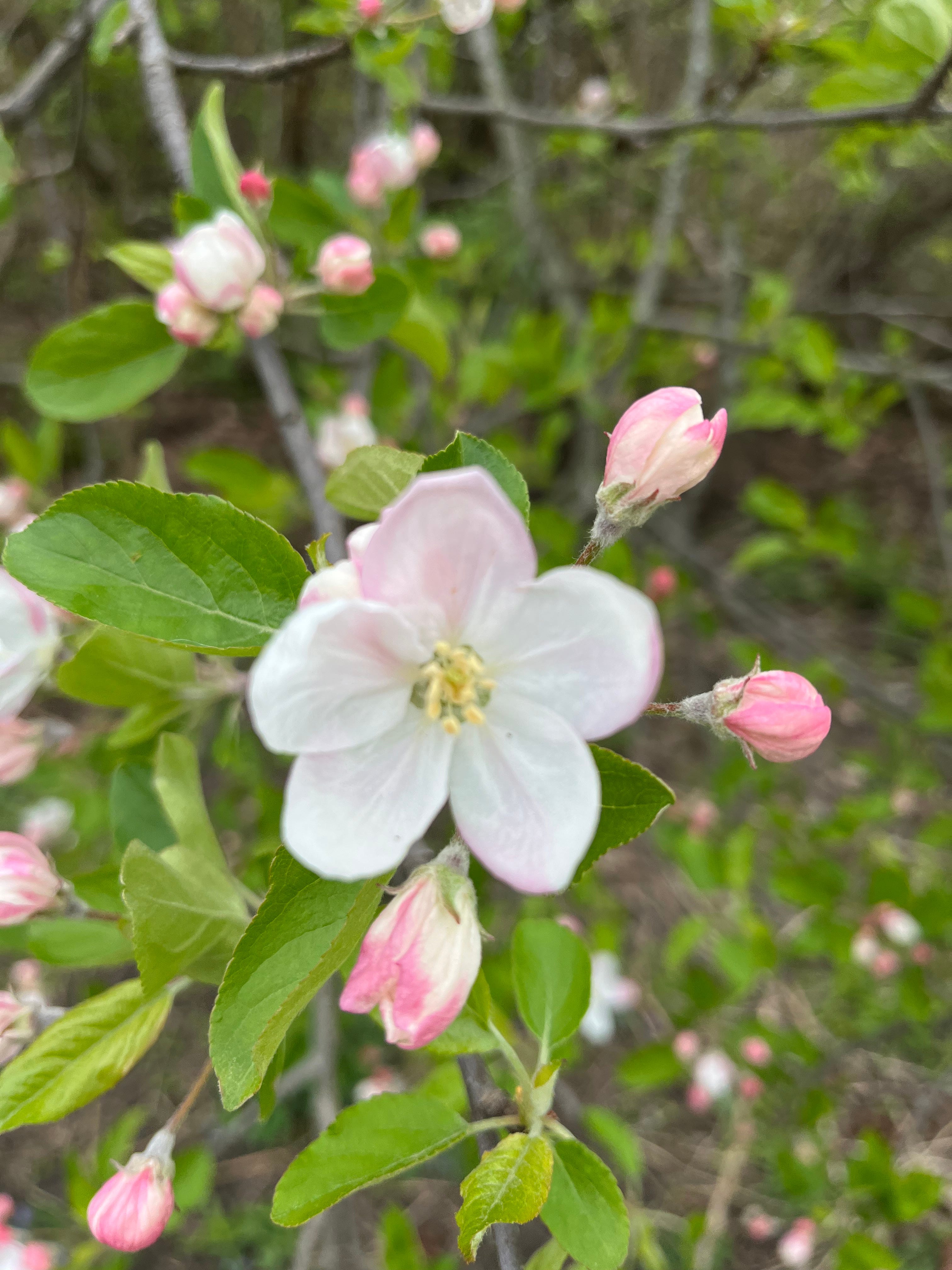
My first walk back was not a trail, it was that birding walk last weekend in an urban park here in Chicago. I touched trees and smelled flowers. I spotted a Virginia rail and a palm warbler and a warbling vireo along with all the angry, epauletted red winged blackbirds. There were clusters of birders all through the park. I came upon one group, and as I got close to them, I realized that one young person was holding out their hand to the tree, and that a tiny bright chickadee was sitting nearby on a branch. They stood perfectly still, and the bird swooped in to take a seed from their outstretch palm, “You got it?” They asked their friend. “I did!” their friend said, holding up his phone for them to see, an image of the bird eating out of their palm. Then they traded phone and seeds so that he could have a turn. It was so simple. It was so quiet.
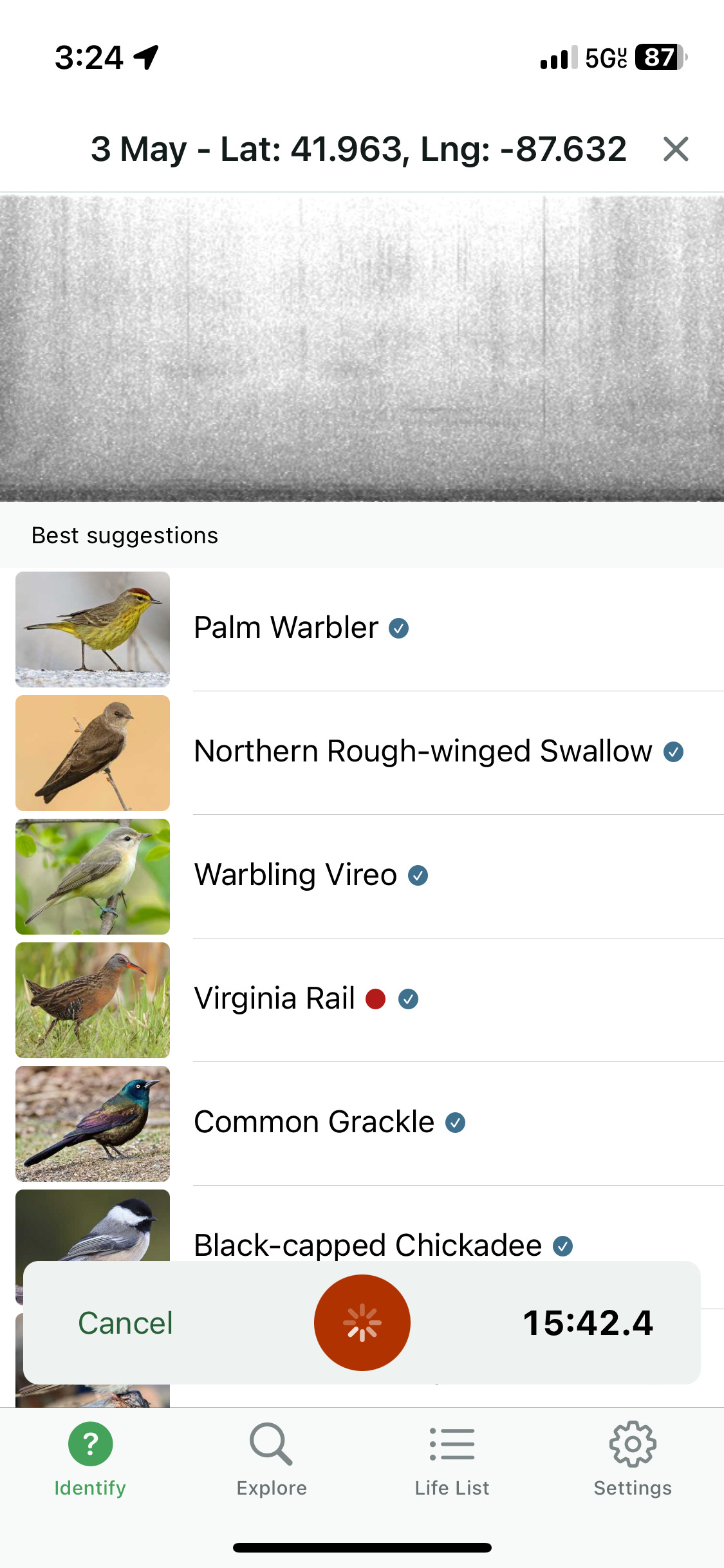
I’ll take that to one of my favorite walks this coming weekend. I may not get as far as I did a few months ago, before this latest accident. But I will stretch out, come out of the crouch long enough to remember that healing takes time, and that we all have the power to push back on the horrible losses of the moment. We can fix this. And if that feels like bullshit just now, take a moment to breathe, because you can heal your sense of powerlessness too. Maybe download the Merlin birding app. Maybe go out on Mother’s Day, May 10, which is the Big Day for birders in the States and stand in a forest and listen to the creatures who move through the trees. Maybe plan for the next march. Even if you are too disabled to make it there yourself, you can spread the word. Find a way to be of use or a way to be at peace. Then come back and tell me about it. We’ll keep each other company step by step.
I’ll write more soon.
Love,
Eiren
PS.
Here are a few places you can listen to me chatting about books that have dropped since my fall:
Minnesota Public Radio’s Big Books Bold Ideas talking about All the Water in the World with Kerry Miller and Kelly Gordon.
Writing Your Resilliance with Lisa Cooper Ellison talking about The Mourner’s Bestiary.
The Writer’s Voice with Francesca Rheannon talking about All the Water in the World.
Here’s one of my very favorite reviews of The Mourner’s Bestiary in The Christian Century.
A round up of climate fiction Books in Marie Claire featuring All the Water in the World.
Thank you for sharing the lilacs. I have such an affection for them. We absolutely need the collective and the birds. I was able to talk birds at work for just a few moments today with a colleague and it made it all brighter.