
At Two Union Stations
One year and 10,000 miles later.

Hello Beauties,
There is no good way to sum up last year, except to say that I will always remember the train.
I think we’ll all be unpacking this year for a long time to come, and maybe we should gird ourselves for any multiples of five—’20, ’25. I will be unpacking my own year for a very long time, trying to remember what comes back to me only as snippets. It was a year of over 10,000 miles of travel, of touring two books, of two broken bones (yes, two), and of great darkness in my country and menace in my city.
But, for me, the train was the year in miniature, an island of reflection that began when, on December 17, the kid and I boarded the Amtrak Empire Builder in Portland, Oregon to ride the 2000 miles home to Chicago.
We’d come up with the idea a month earlier, sitting on a bench in Powell’s Books, brainstorming how to move home a ton of stuff from a dorm room, and the two of us, without driving across the northern part of the country in the dead of winter.
By then I’d done that 2000-mile drive four times in 2025 and twice in 2024, and while I’d soaked in hot springs and hiked a cinder cone volcano and seen pictographs and Rocky Mountain passes and researched my next two books, I had also almost been killed by a semi-truck on I-80 in Wyoming and caught Covid for the second time. Add winter weather to that drive and I was panicked about making my crossings total eight in two years.
My dear friend Josephine had tried to convince a me month earlier that we should take the train. She had done her book tours this way, gone back and forth to see family this way, and as a climate activist, she was part of a movement of people attempting to normalize train travel as a routine option in this car-centric place. Did you know that some universities will not reimburse faculty travel by train? A student told me that. I had dismissed her idea at our writing meetup. Too expensive, too much stuff to bring back. But, sitting in Powell’s, wondering how to ship books and clothes and a bike, when it was too dangerous to drive and too restrictive to fly, the kid suggested, “Why don’t we take the train?” and my friend’s enthusiasm swam back into my mind.
We looked up the costs and a roomette for the trip of us was the same price as two one-way plane tickets, and the number of bags we were allowed was enormous.
“I think this could work,” I said, and then we got back to buying books.
Two weeks later we were booked and planning, and in mid-December we were packing out the dorm room. There were complexities, including the lack of movers to help, or bike store workers to help, or really knowing anyone in Portland well enough to ask for help. We managed to load everything the kid owned in eight bags and a bike bag, haul it from campus to our hotel and from the hotel to the train station via ride shares, and I still don’t know how we did it.
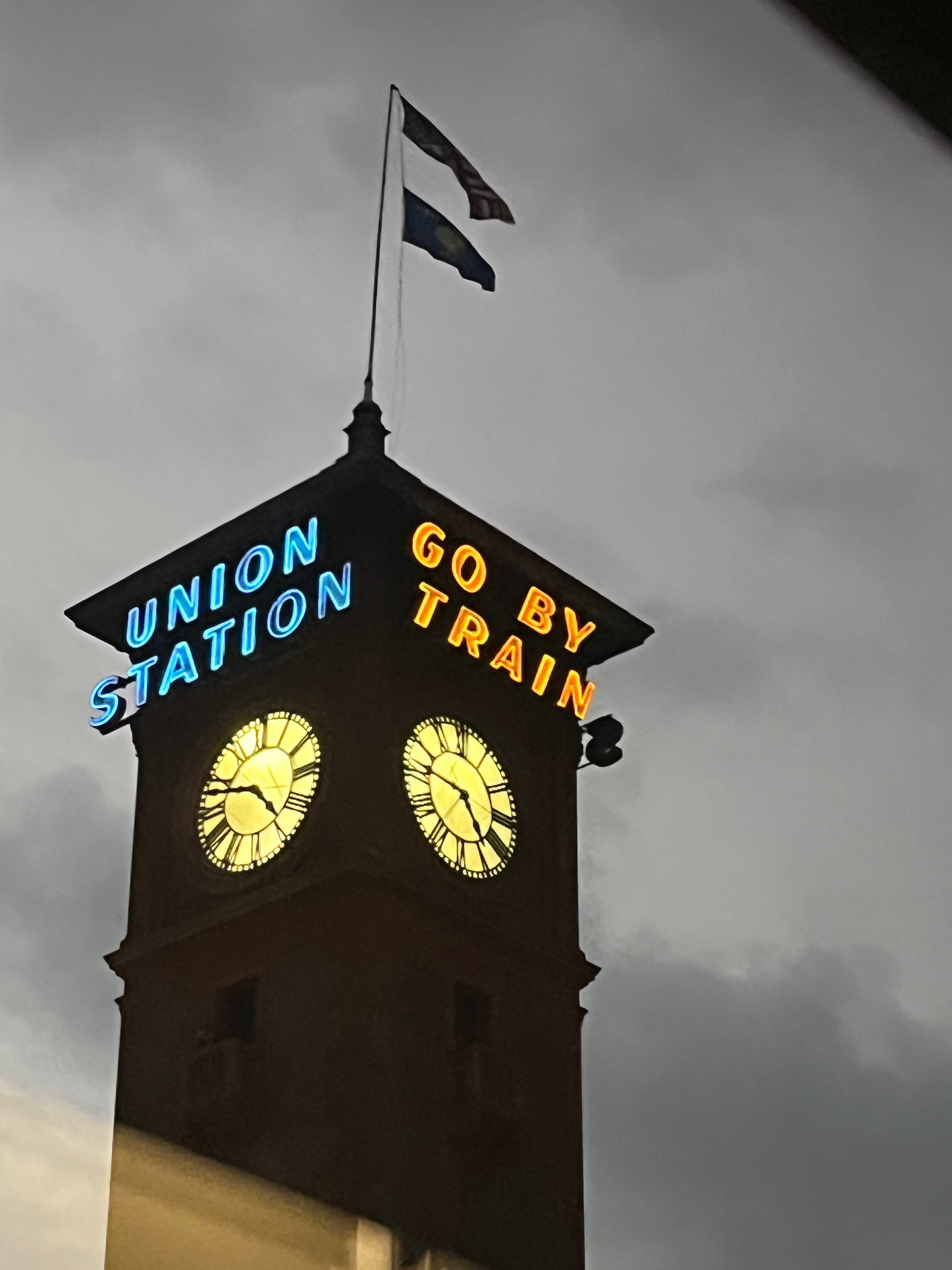
With forty-five minutes to spare, we found ourselves in the sleeper passenger lounge of Portland’s Union Station before boarding, all our gear stashed, hot cocoas on tap, about to head east. The train left on time. We settled into boxed dinners and cribbage in the observation car.
I had done precious little research about the train, especially for me. I am steeped right now not only in the ongoing travel to support All the Water in the World, but also the research for my next books. I have mentioned elsewhere that usually write a novel and a work of creative nonfiction at the same time. My neurodivergence asks me to research, and to go deep into what’s obsessing me, and I build each book from different parts of that work. I love it. With the last books it was grief, flooding, and the ocean; with these it is rage, plants, and fire. The last books were books of the east coast; these are books about what for me is the great American mystery and darkness, the West.
My brain, therefore, is swimming in statistics and science and history about wildfires, prescribed burns, matrilineal fire culture, lodgepole pines, mining unions, yarrow, pine beetles, and ice palaces. I have little room for trains right now. I am not that kind of neurodivergent.
But I love Amtrak. As a child, I took regular trips from rural Western Massachusetts where I was raised to New York City, either down the Hudson River, future site of my novel, or down the Connecticut River Corridor from Springfield. In the Midwest, starved of regional commuter train lines, and in an era of disinvestment in Amtrak, I don’t ride much, even though my aunt in Winona, Minnesota is directly connected to me by train, as is the wonderful city of Minneapolis and its bookstores. Like many people who have stopped considering trains, if asked, I might have told you that taking the Empire Builder was a bucket list item. I meant to take it to Glacier National Park from Chicago, where I could stay in the hotel on the Eastern Gate and use park busses to skip crowded parking lots at the most wonderful trailheads. Bucket list, not regular option.
My sense of Amtrak had become fossilized. I thought of it as a huge resource for our geographically huge country that was being starved of funding, resulting in further reliance on planes and cars, while other countries outpace us with high speed rail, and electric vehicles and reductions of fossil fuels. I thought of trains as something one only got to use in commuter-heavy Eastern corridor between Boston and Washington D.C., or in the vast swath of open country that mostly tourists and retirees crossed over multiple days in expensive sleeper cars.
What I didn’t know until we returned is that Amtrak is enjoying a boost of ridership. In 2025, the number of passengers increased to 34 million in a country of around 348 million people.
My impression of the current state of trains is built on the history—a concerted effort to hamstring trains by allowing our rails to be privatized so that freight trains have use of the rails first, and passenger trains must wait. And, relevant to my interests, a great deal of it is due to the disinvestment in trains that came as a way to suppress Unions, and to make the American union itself rely on aircraft and automobiles. As Nonie might ask in All the Water, “Who benefits?” Who benefits from a strangled train system?
In my case, oil companies have benefited mightily from the six research/college trips I’ve made in my car. And airlines have benefited from every plane ticket we’ve bought in the last two years for the kid to fly to Portland.
But I digress. We were left waiting in Union Station, about to board the train.
We boarded. It was seamless. We had a train station attendant with a classic railroad conductor hat and a red beard. Heaven. Our itinerary was pretty straightforward: we’d board at 5PM in Portland, move northeast to Spokane, Washington in the night, and at midnight we’d join up with our sister train from Seattle, get their dining car and passengers, and move on, into dawn in the Rockies, across the plains to Fargo, North Dakota, then down the Mississippi River and across Wisconsin to home by 5PM two days later. Forty-eight hours, 2000 miles, seven states.
After cribbage in the observation car, we had a roomette turndown service from Mariah, who shared a name with the childhood best friend who moved away when I was little, with whom I played the game, I Write, You Draw, where I would make up a story and she’d illustrate it. I looked her up once—she is a children’s book illustrator, and I am a novelist.
The kid and I did a crossword, and tucked into our own bunks, and I woke up, kid in the bunk above me, when we stopped in Spokane at midnight as expected. I believed that when I woke again, we’d be close to Glacier National Park. But the train stayed quiet, and when I woke at dawn, we were still in Spokane.
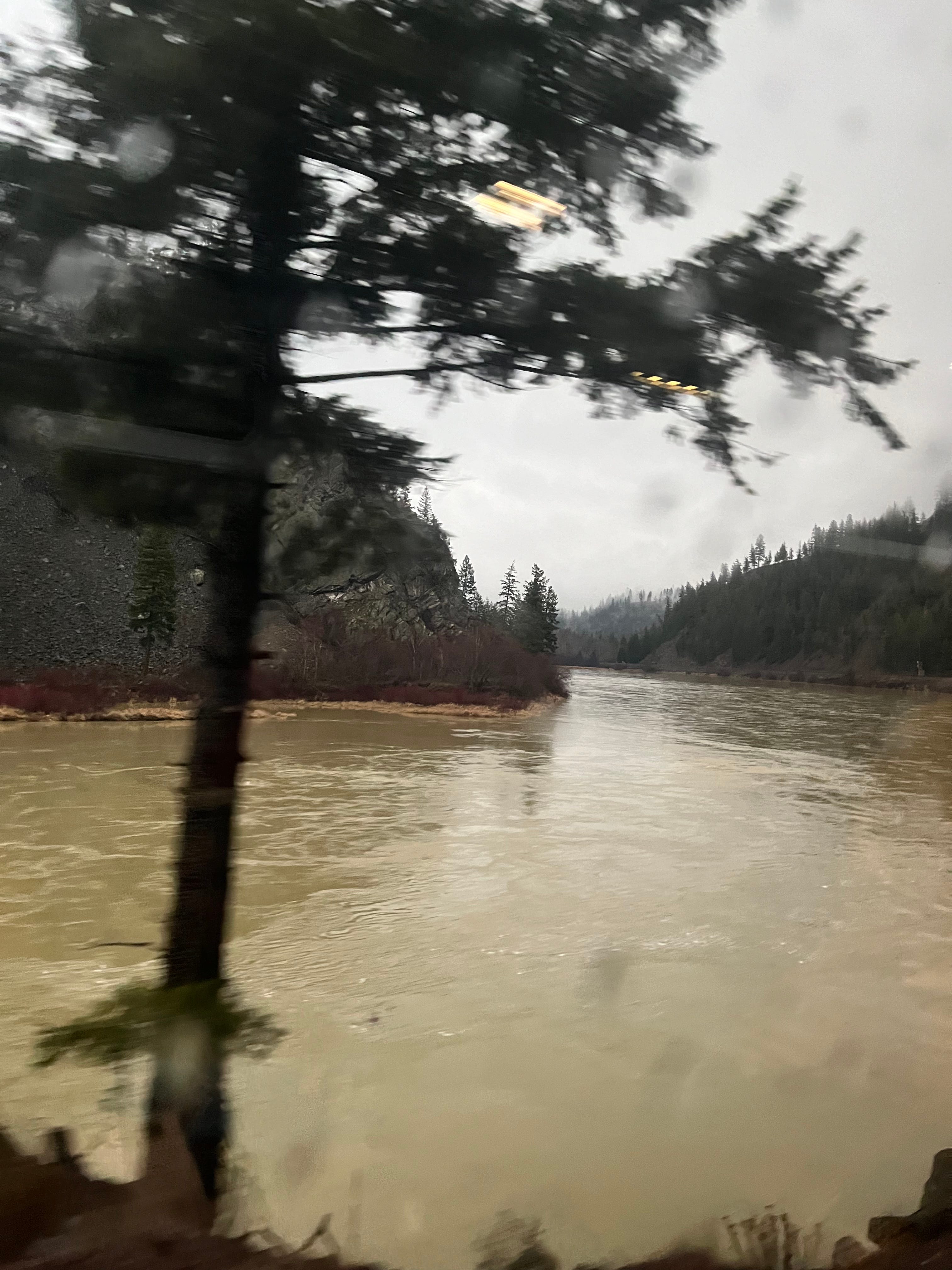
During the chaotic weeks of preparing to move the kid home, while ICE came back to the city, and Chicago got more snow in December than we had since 1978, an atmospheric river had come to the west coast, and by the time we were leaving Portland, horrible flooding had hit Washington state. Our sister train had been caught in it. Or rather, she had not been able to leave Seattle until the tracks had been cleared of fallen trees and debris.
When announcements resumed in the morning, we were told we were still waiting on our sister, but there would be hot breakfast. In the end, we waited for the train for thirteen hours in Spokane. We were cozy and warm, doing more crossword puzzles in our bunks, playing video games, me working on the next novel, fed and rested and so happy to be together, with baggage in the hold, and no semi-trucks anywhere. The wait couldn’t dim the euphoria of the travel.
I had forgotten how much I loved trains. And in that, I am like so many Americans now. Citizens have started to expect that rail travel is slow and delayed, unreliable and expensive compared to air travel. Delays are routine enough that any YouTube Train Guy worth his salt warns intrepid train travelers to expect them. But this one, this one fifteen hours in the end, this one was climate change—the flooding, the swollen rivers of Washington state, the ruined mountain passes, the fallen bridges, the evacuations, the disaster, the lost homes. I began the year traveling towards wildfires in LA; I was ending it traveling away from flooding in Seattle.
Here, at end of this year, I realize how much it always will be framed for me, by these twin disasters, fire and water. It was punctuated with so many more, including the disastrous flooding in Texas, and the hurricane that destroyed so much of the Southern Coast of Jamaica. It was so full of those horrors that I forget them.
My own life was so full this year that I have forgotten most of it. I probably put more than 10,000 miles on my car driving and more than that number of miles on my body, touring, and recovering from touring. I wish I was the kind of person who could do a proper round up, with stats, list for you all the states, the bookstores, the literary festivals, the libraries, the book clubs, the readers. I wish I could offer a roundup of the conversations, the NPR stations, the podcasts, the magazines. I am absolutely not that kind of person.
Ten years from now, out of the depths of my brain, one of these events will likely surface and I will feel some kind of nostalgic joy, and maybe be able to take it in. But in the moment, I have the blessing of forgetting. I forget trauma as a defensive response, but like many people who have survived difficult times, I also forget the good stuff.
When people I love see me for the first time in months they ask about this wild year and I say, “Goodness! It feels like I looked down in September of 2024 and I looked up just now and it is January of 2026!” Which is true. I can remember some truly spectacular moments, of course, the thrill of walking into a bookstore event in Wisconsin to see that at every table, every reader had a copy of my book in front of them, a shock akin to them all having baby pictures of my kid. I can remember the Chicago Review of Books’ Chirby awards in December, where I did not win in either category where I was nominated, fiction and nonfiction, but had the pleasure of being coached to say, “It is just an honor to be nominated. Twice.” There are more. I hope the memory of them comes back over time. I hope people remind me of them. Maybe do that if you see me.
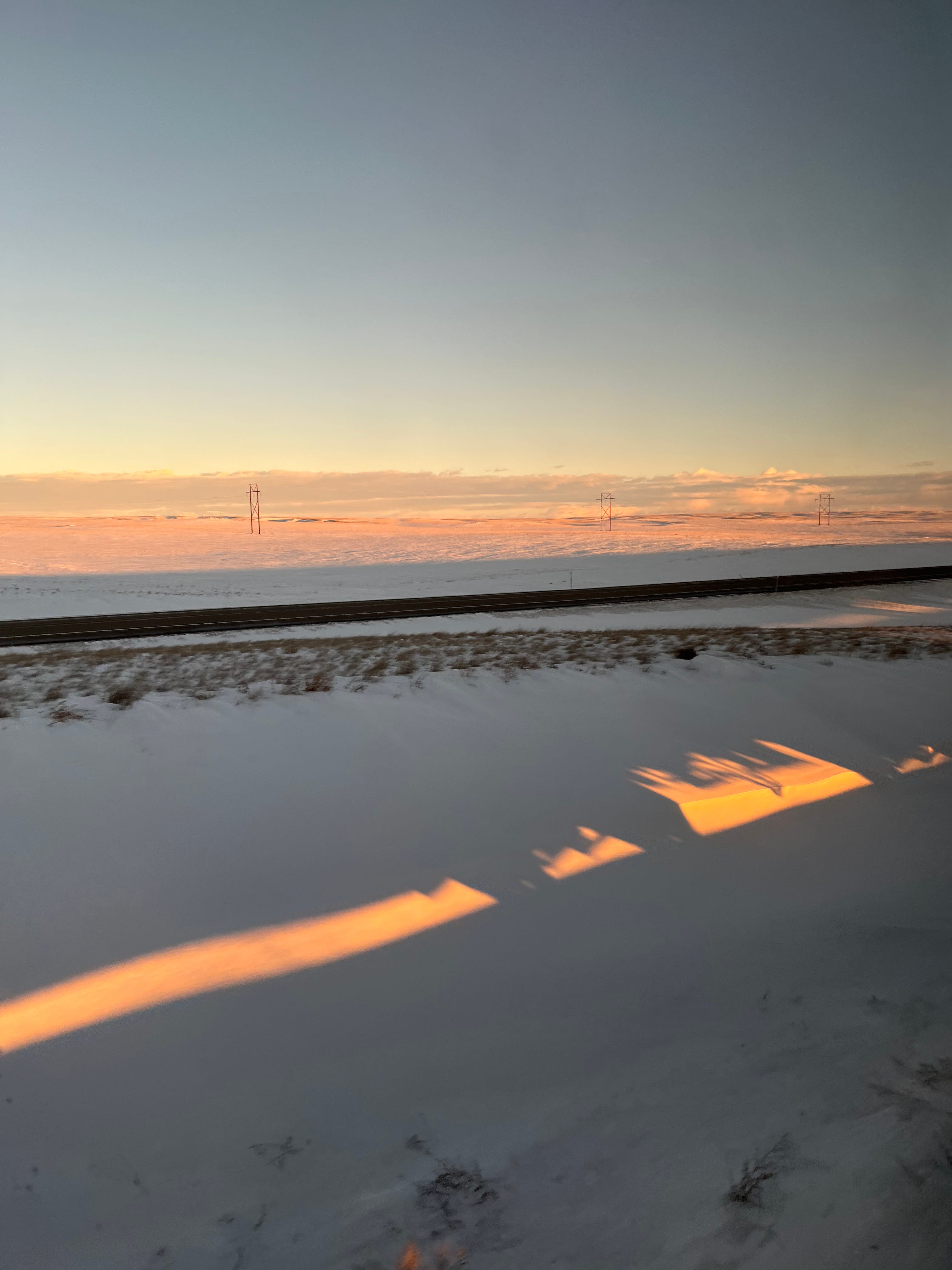
I will remember the delay in the train, of course. But I will also remember that once our sister train arrived, and we were all jolted with the sensation of our trains linking together, we were treated to lunch in the dining car (did you know all food comes free with a roomette?). And then we sat in the observation car again, and we met so many people, strangers, Americans, over food, with the absolutely gob smacking beauty of the winter West rushing past our windows, forests, lakes, snowy pines, mountains, small cities, Indigenous nations, elk, mule deer, the tiny footprints of little animals on a snow-covered prairie.
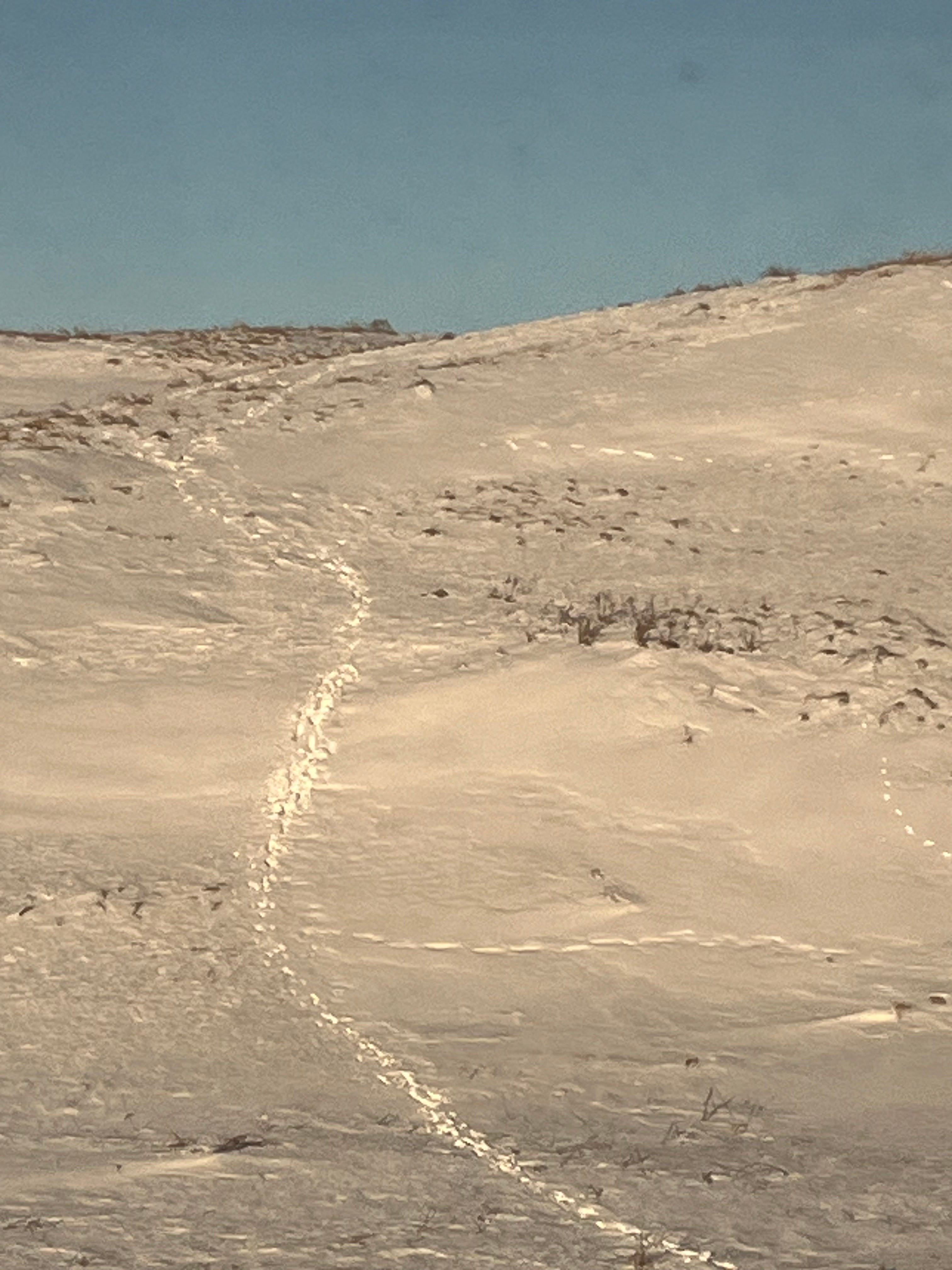
It was all of us, retirees, newlywed couples, families, Mennonites, conservative, progressive, uninterested, Latin, white, black, Muslim, tourists, Hindu, workers, oil field employees, teachers, nurses, a priest, an engineer cleaning up nuclear waste, and us, a writer and a college student. We overheard a woman tell someone that after Zohran Mamdani was inaugurated as New York’s mayor there’d never be another Christmas tree in Rockefeller Plaza again. Just after the kid and I were discussing the complexity of beautiful, problematic Idaho—the grave of Hemingway, the progressive bookstores, and the huge number of white supremacists—we overheard a woman praising the state and its hard-working conservatism, and railing against her home state of Minnesota and Governor Tim Walz.
“What’s wrong with Walz?” the kid asked.
“The Somali thing!” she said.
“There are scandals in every state,” I reminded her.
All her belligerence fled from her tone and body language, “True,” she said.
We met a queer family with young children and talked with them about what to do in Chicago during their holiday visit. It was a long enough conversation that their kids opened up, showing us the puppets that they’d made on the train, and talking about family.
The older kid said, “I have an uncle and he gave my mom a gift!”
“What did he give her?” I asked.
“Sperm!” the kid said. And we all laughed, and the parents blushed, and then relaxed when they realized we were safe people, and it was OK for their kid to practice the story with us.
“What a nice gift!” I said.
“It was for Halloween!” The kid said.
We did not see Glacier in the daylight but were delayed again at the stop for East Glacier, where I hope to return when the stop and the hotel are both open again. But there it was, picked out in the low light of the hotel windows and the low light of the single streetlight at the station. Snow was falling, and I was tangled in Amtrak blankets, and it might have been one of the most romantic moments of my life, some combination of the lantern waste of The Lion, The Witch and the Wardrobe, and the cozy winter of any children’s book about the season, maybe even Emmet Otter’s Jugband Christmas, the favorite that has defined my holidays for decades.
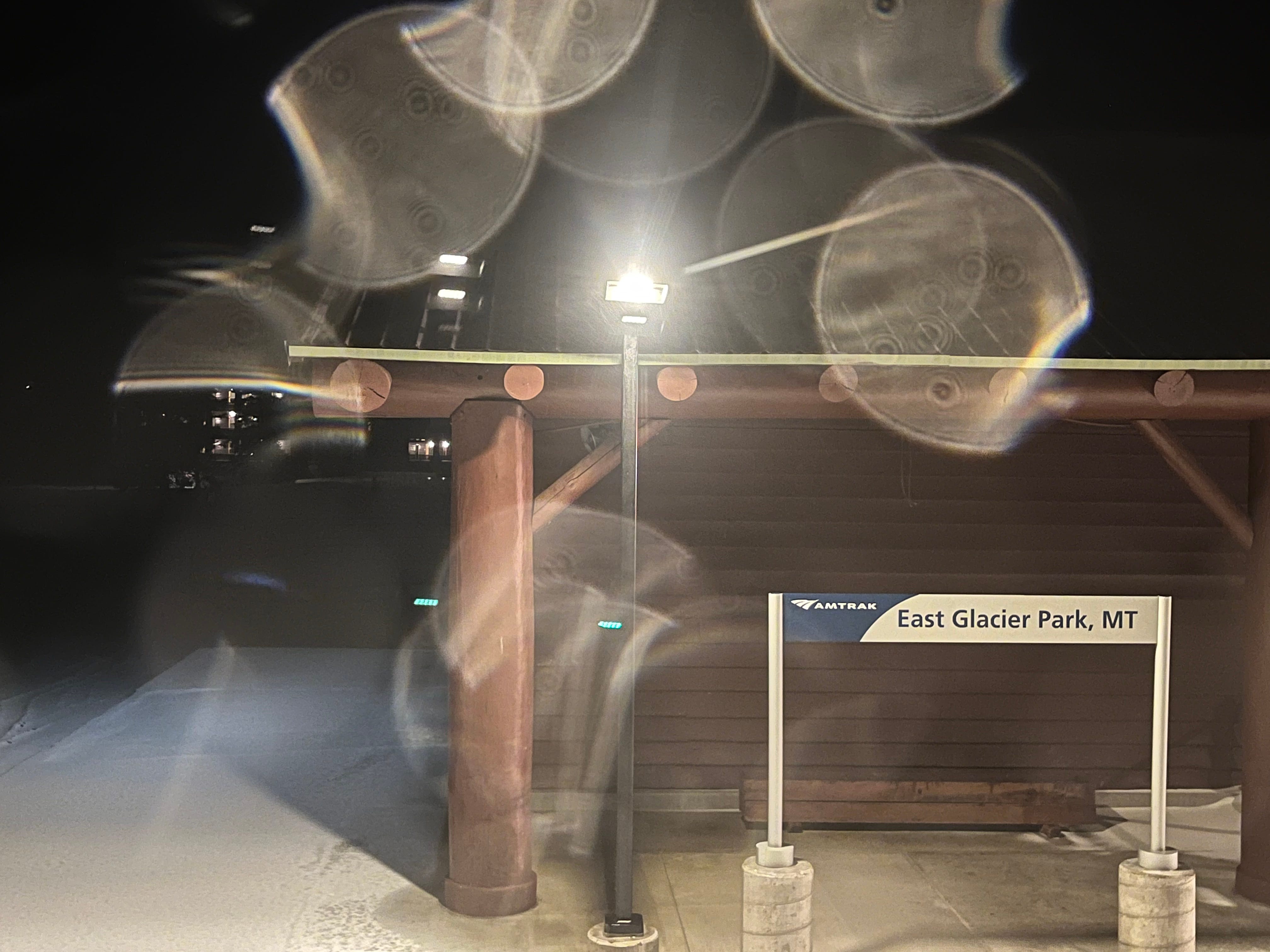
At every delicious meal, we talked about politics and books and hometowns, about travel and trains, about how the delay had played out for people coming from Seattle (terrible) and Portland (just fine), and what we were all going to do for the holiday. It was calming, and easy, and warm, cozy and sweet, complicated, and so human scale, so much all the things I love about this country, and so opposite of all the time I spend scrolling news and opinions online. We were caught in climate change, and the death of our democracy, and yet, we were still trying to make a microcosm of our country there in the closed system of our train.
There, on the train, we were a country that has made a lot of mistakes, that was afraid a lot of the time, that was trying, in all our own ways, to survive climate collapse, political collapse, economic collapse, infrastructural collapse. It was hard not to think about the end of the Empire, there on the Empire Builder. It was hard not to think about the wounds we were crossing, traversing the Blackfeet Nation as we were, a place that has been on my mind lately after reading Stephen Graham Jones incandescently brilliant The Buffalo Hunter Hunter this year, and reading all I have about the wildfires of the West, and the suppression of Indigenous fire knowledge.
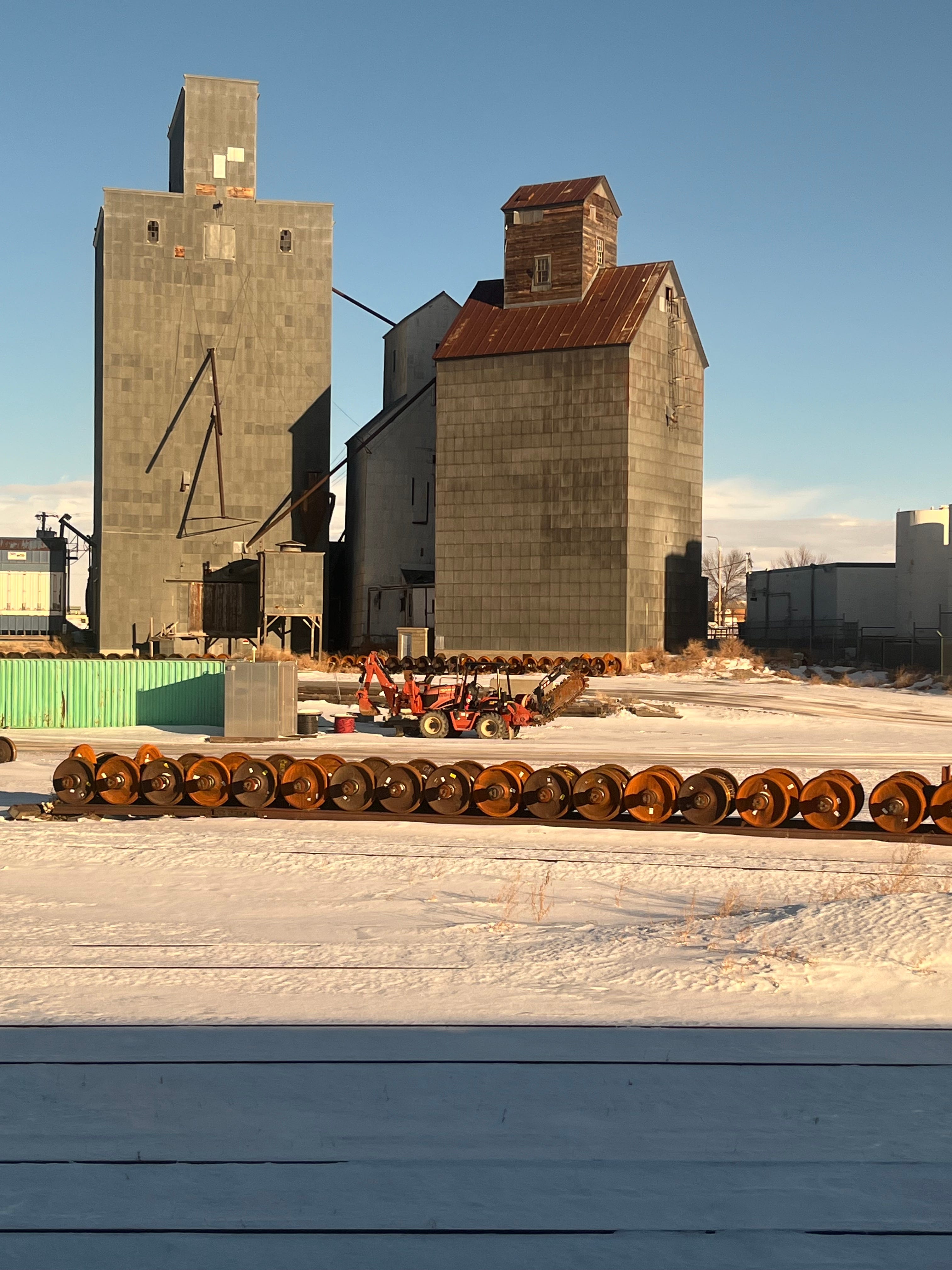
I loved every second of the ride, every luminous person, every inch of country we crossed.
I loved everything.
Once home, fifteen hours late but rested, fed, our luggage intact, our city cold and welcoming, a huge Christmas tree in Chicago’s Union Station, we crammed all the kid’s things in the car and drove back to Logan Square and fell asleep in the late morning with the cats. And on Christmas Day, Amtrak refunded our tickets. Getting all those bags home, having all those precious hours together, seeing the country, it cost us $10 in a bike transport fee.
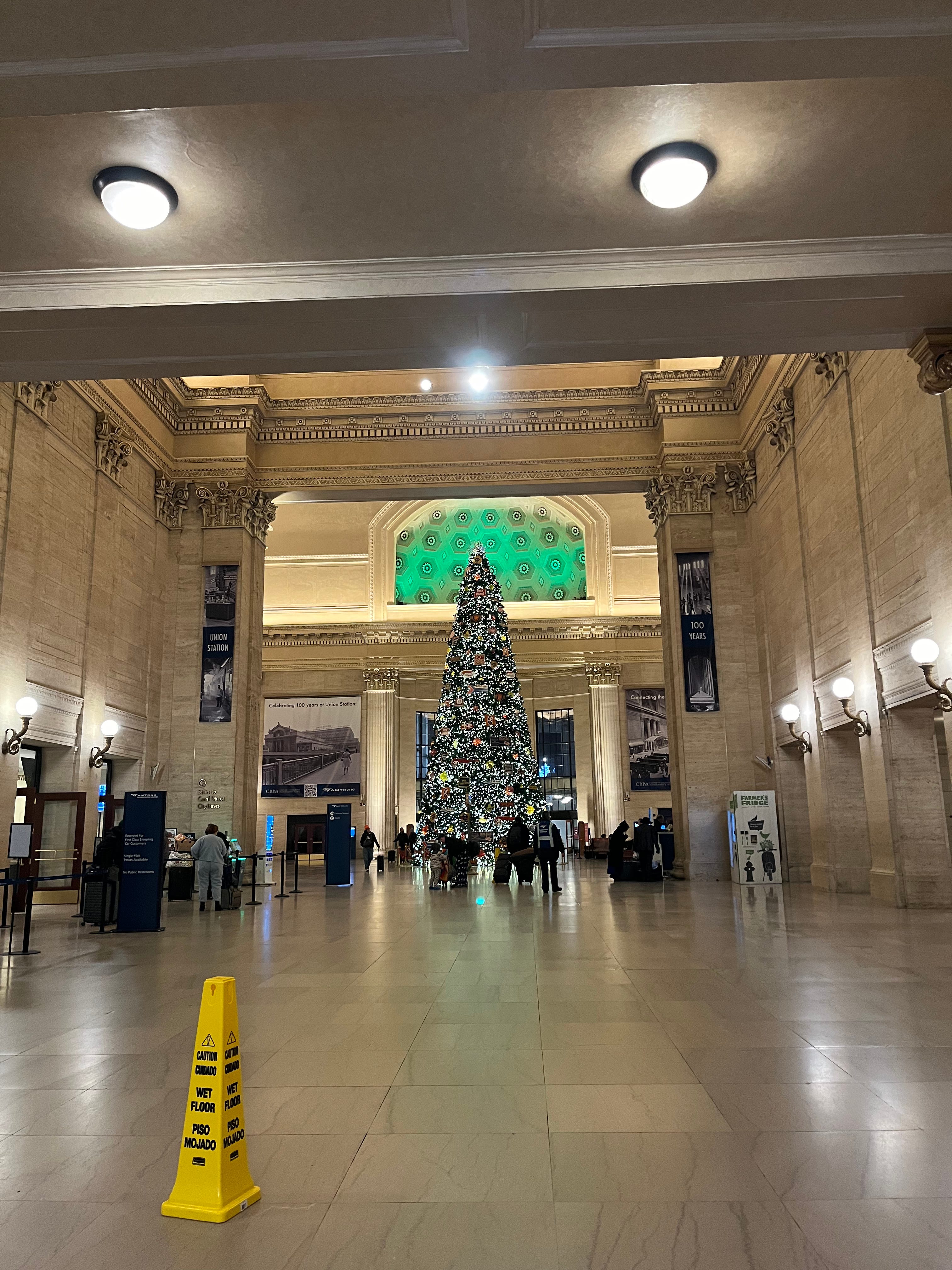
Josephine was right. The kid was right.
Take the train.
I’ll write soon.
Love,
Eiren
PS.
On Wednesday, my novel turns one. I can’t believe it.
That means it is also the one year anniversary of the LA wildfires.
If you are in Chicago, please make time to go to Volumes Bookstore’s Author Goodbye Party on January 6 in Wicker Park. I have the super crud and have broken my ankle (the second broken bone) and may not be well enough to go. But you absolutely should, because the city will be poorer without that place, and because Rebecca George and her sister are icons, and deserve all the flowers, all the hugs, and all the opportunities in the next phase of their lives in books. And buy all the books from them before they close.
So far, 2026 is no less weird and dangerous. Let’s work for peace.
I want to ❤️ this with a hundred ❤️s. Happy new year! I'm so excited for your upcoming pair of books (and so intrigued by your process... another obsessive researcher here!) And thrilled to have this updated info on train travel... so glad you had that time with the kid.